Defamation in Pakistan: notice, suit and criminal complaint
A false statement that damages a reputation can be answered by a civil claim for damages, a criminal complaint or a complaint under the cybercrime law. This note sets out the routes, the short time limits and the defences.
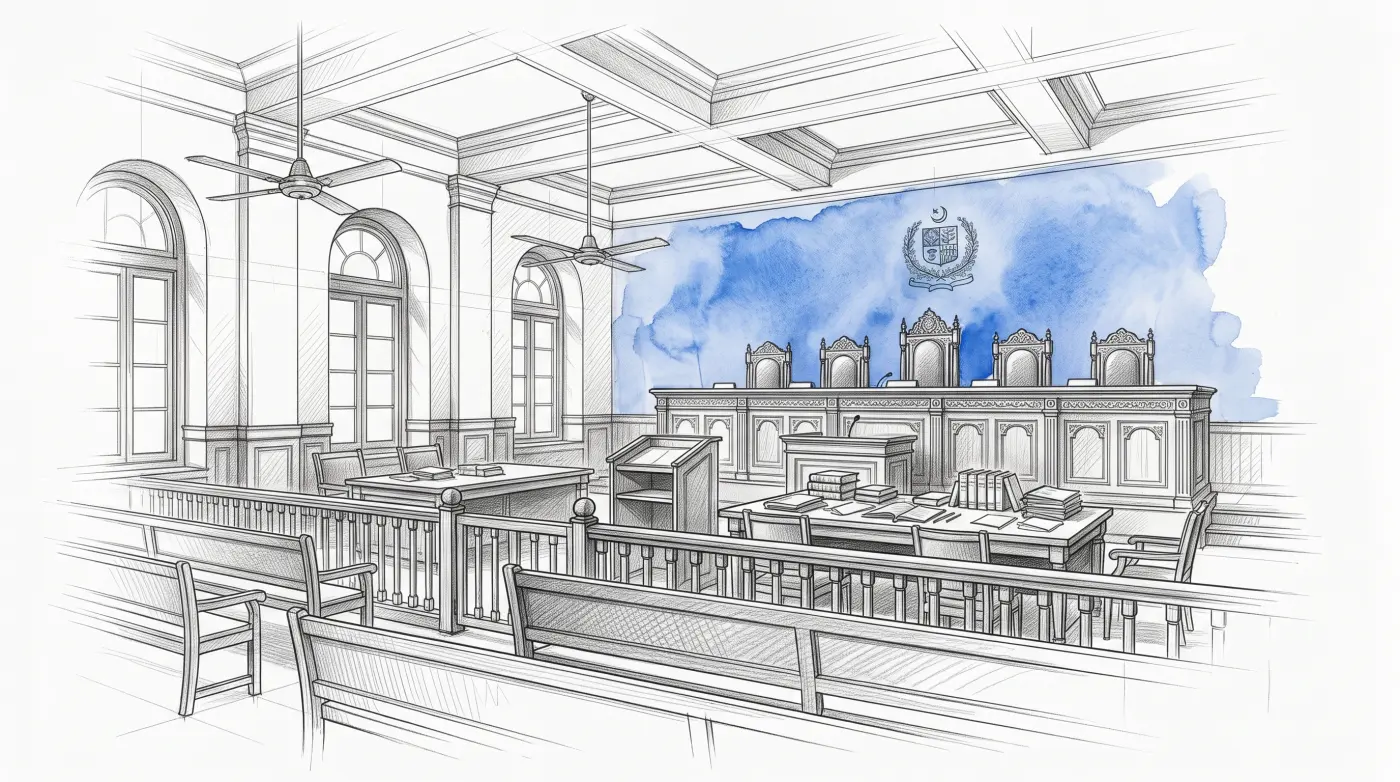
High Court courtroom
The basics
Defamation is a false statement, spoken, written or visual, that injures a person's reputation or exposes them to ridicule, contempt or hatred. Spoken defamation is slander; written, visual or electronic defamation is libel. Under the Defamation Ordinance 2002 it is actionable without proof of special damage.
Three things decide the route: where the claim arises, because Punjab now has its own law; whether the statement was made online; and when the claimant learned of it. The time limits are short.
The routes
Suit under the Defamation Ordinance 2002
Applies outside Punjab. The claimant must give fourteen days' written notice within two months of learning of the publication (section 8) and file the suit in the District Court within six months of learning of it (section 12). The court can order an apology and general damages of not less than Rs 50,000, or not less than Rs 300,000 against the originator, plus any special damage proved.
Punjab Defamation Act 2024
Replaced the Ordinance in Punjab from June 2024. Claims go to a tribunal within sixty days of knowledge, with no notice beforehand. Damage is presumed, and general damages start at Rs 3,000,000. Petitions challenging the Act are pending in the Lahore High Court.
Criminal defamation
Sections 499 to 502 of the Pakistan Penal Code. The punishment under section 500 is simple imprisonment of up to two years, or a fine, or both, and up to five years for the originator. The offence is non-cognizable and bailable: it starts with a private complaint in court, not an FIR.
Online statements
Section 20 of the Prevention of Electronic Crimes Act 2016 punishes knowingly transmitting false information that harms a natural person's reputation or privacy, with up to three years or a fine of up to Rs 1 million. Since the 2025 amendments the offence is cognizable and non-bailable, and complaints go to the National Cyber Crime Investigation Agency. The reach of this section has been contested in the Islamabad High Court.
What to do
1.Preserve the statement at once: screenshots showing the account, date, time and web address, the newspaper page or the recording, and the names of people who read or heard it.
2.Note the date you first learned of it. Every time limit runs from that date.
3.Record the harm: lost work or contracts, messages from people who saw the statement, and any other consequences.
4.Send the written notice where the law requires one, demanding withdrawal and an apology, and keep proof of delivery.
5.For online material, also report it to the platform and ask for removal.
6.File in the right forum within time: the District Court under the Ordinance, the tribunal in Punjab, a private complaint for criminal defamation, or a complaint to the National Cyber Crime Investigation Agency.
Defences
The statement is true and was made for the public good.
It was fair comment on a matter of public interest.
It was privileged, for example a statement made in court or parliamentary proceedings.
The defendant was not the author, editor or publisher.
The claimant agreed to the publication.
An apology or a contradiction was offered and refused.
Points people get wrong
Missing the two-month notice or the six-month filing date under the Ordinance can end the claim.
The figure in the Punjab Act is a minimum for general damages. It is not a fine and not a cap.
Section 20 of the cybercrime law protects natural persons, not companies.
Criminal defamation under the Penal Code needs a private complaint. The police do not register an FIR for it.
Common questions
What is the time limit for a defamation case in Pakistan?
Under the Defamation Ordinance 2002, a written notice within two months of learning of the statement and a suit within six months. Under the Punjab Defamation Act 2024, a claim within sixty days of knowledge.
Can I file an FIR for defamation?
Not for defamation under the Pakistan Penal Code, which is non-cognizable and proceeds on a private complaint to the court. A false statement made online may fall under the Prevention of Electronic Crimes Act 2016, which is investigated by the National Cyber Crime Investigation Agency.
How much can a court award for defamation?
Under the Ordinance, general damages of at least Rs 50,000, or at least Rs 300,000 against the originator, plus proved special damage. Under the Punjab Act, general damages start at Rs 3,000,000.
About this note
Reviewed . This note gives general information about the law in Pakistan as at the review date. It is not legal advice, and the right step in a particular case depends on its facts.
To discuss a matter, write to legal@blackwell.com.pk with a short account of what happened. The first conversation is confidential and carries no obligation.